
Engineering challenge
In deforming solids, thermal and mechanical fields influence one another. When the coupling is implemented via separate or one-way workflows, important feedback can be missed and model setup becomes difficult to maintain.
Couple temperature and deformation in a two-way workflow without building a custom coupling chain.
In deforming solids, thermal and mechanical fields influence one another. When the coupling is implemented via separate or one-way workflows, important feedback can be missed and model setup becomes difficult to maintain.
Phractals treats thermoelastic response as a unified, two-way problem. Temperature can drive deformation while mechanical loading can alter the thermal field, and the same setup can incorporate fractional material and transport models.
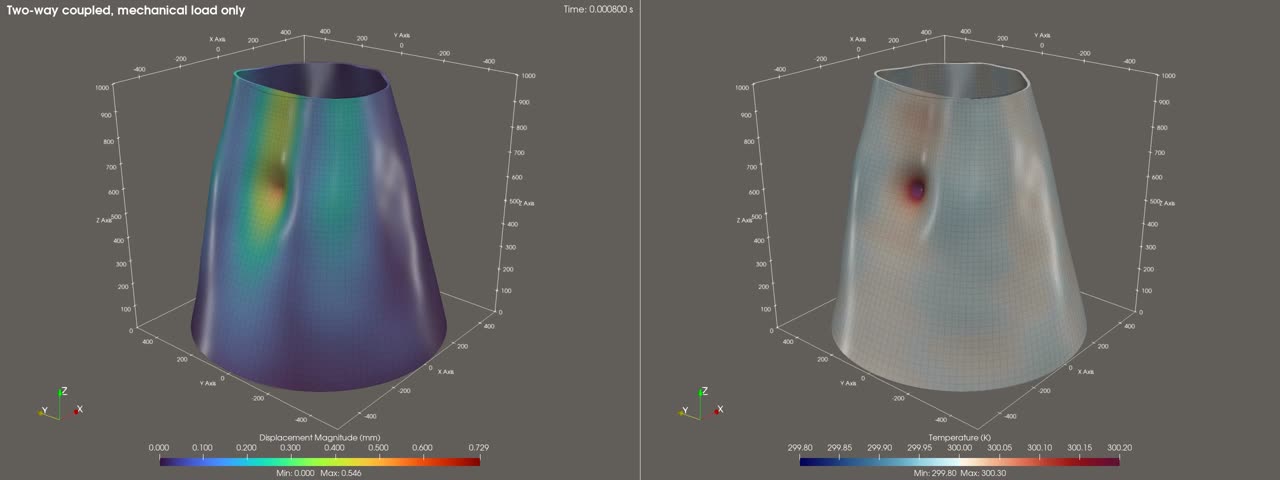
Two complementary animations showing the transient response of a sample conical shell under two-way coupling: a mechanical load producing a thermal response (left), and a thermal load producing a mechanical response (right).
A concentrated mechanical load produces simultaneous deformation and temperature fluctuations in a two-way coupled (mechanical-to-thermal) model.
A concentrated thermal load produces a thermal wave which in turns drives mechanical response.
See thermal and mechanical feedback within one simulation setup.
Reduce the need for custom field-transfer and coupling workflows.
Combine thermoelastic coupling with history-aware material and transport behavior.
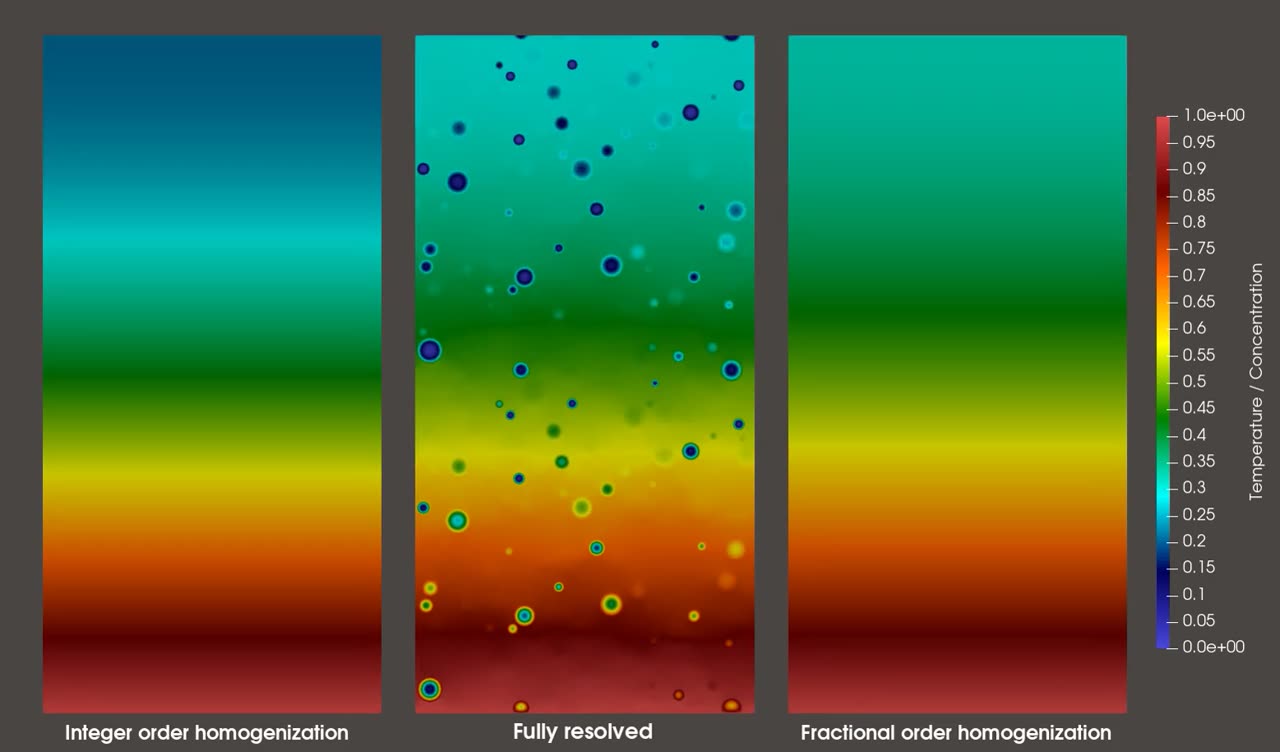
Retain thermal-memory effects and microscale behavior without resolving every feature in the production model.
Explore the case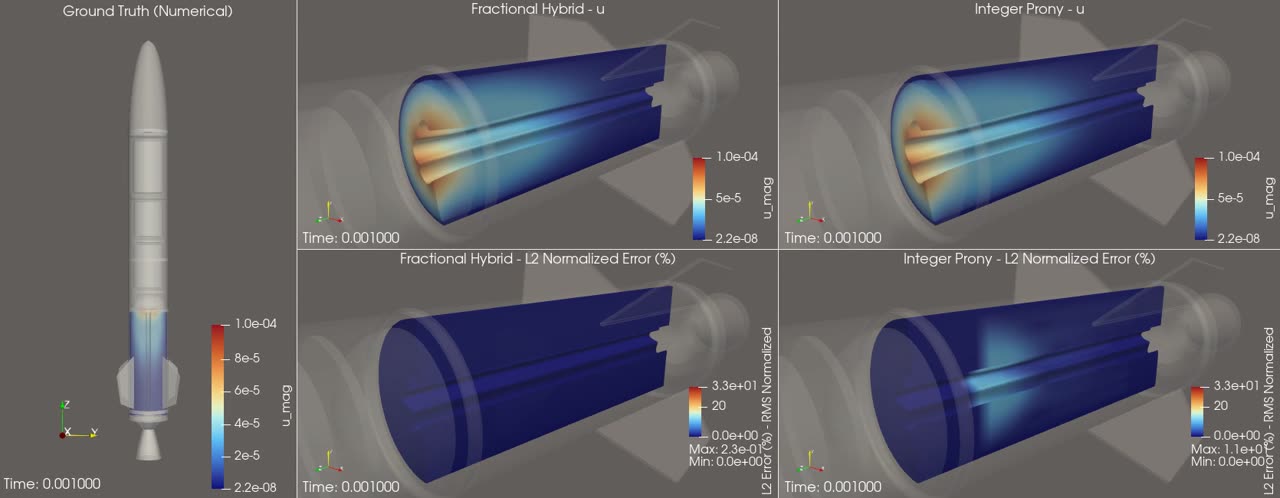
Capture broadband, history-dependent material response with a compact fractional-hybrid model.
Explore the case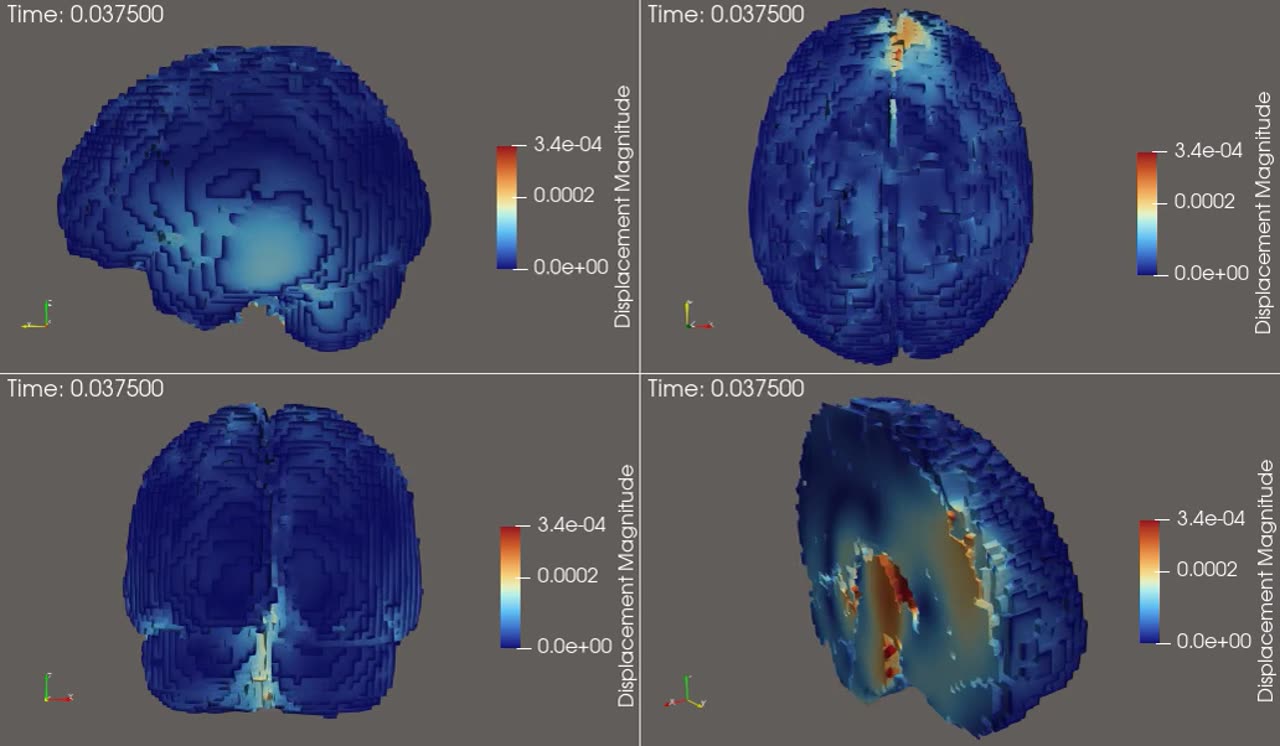
Study transient deformation in compliant, heterogeneous materials where damping and history shape the response.
Explore the caseWe will identify whether this Phractals workflow fits your engineering decision.