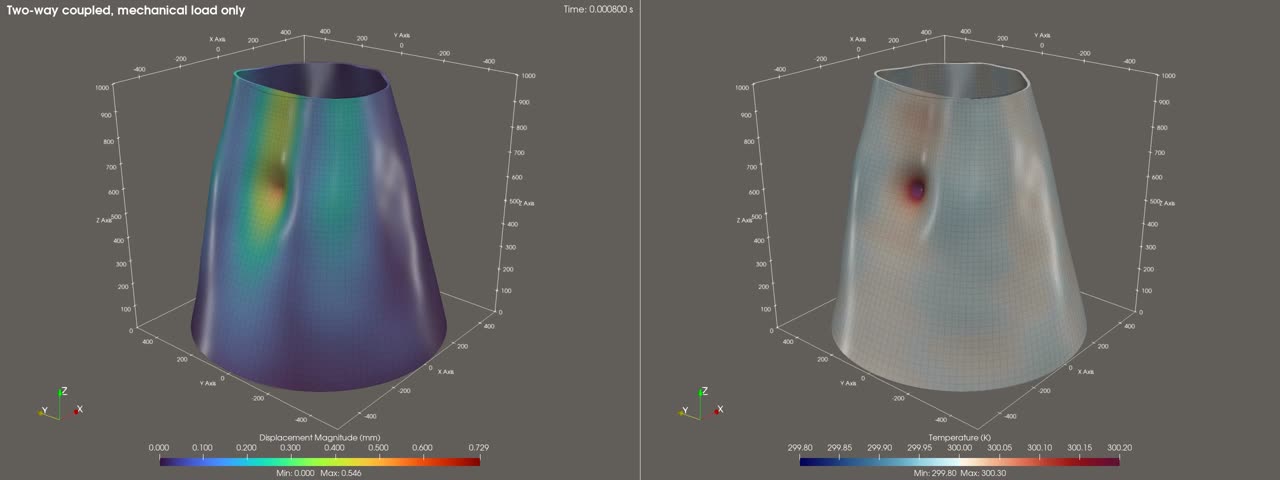
Soft-material dynamics

Biomaterial dynamics

Study transient deformation in compliant, heterogeneous materials where damping and history shape the response.

Biomaterial dynamics schematic overview
Engineering context

The challenge and the Phractals approach.

Engineering challenge

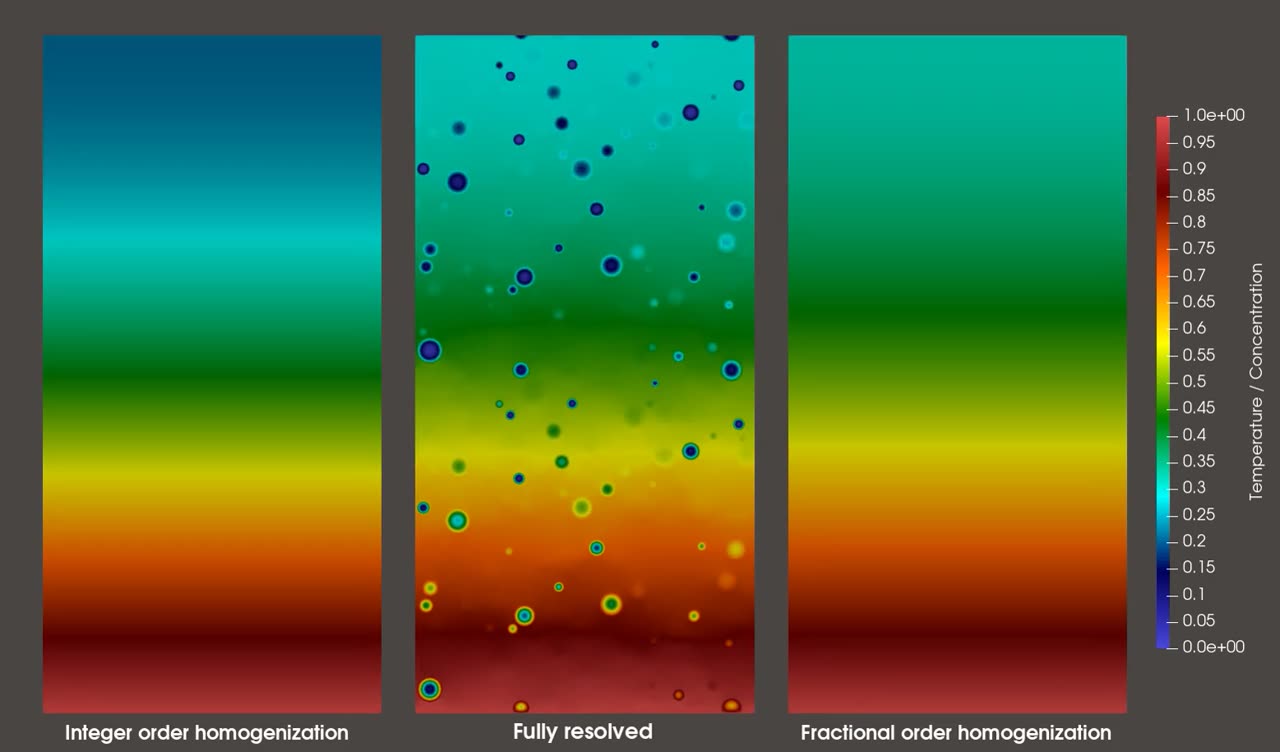
Biological and tissue-like materials are soft, heterogeneous, and strongly time dependent. Impact and wave-driven response can spread, attenuate, and localize in ways that a simple memoryless material law does not describe. In many cases, the typical exponential relaxation of Prony series is also inaccurate.
Phractals approach

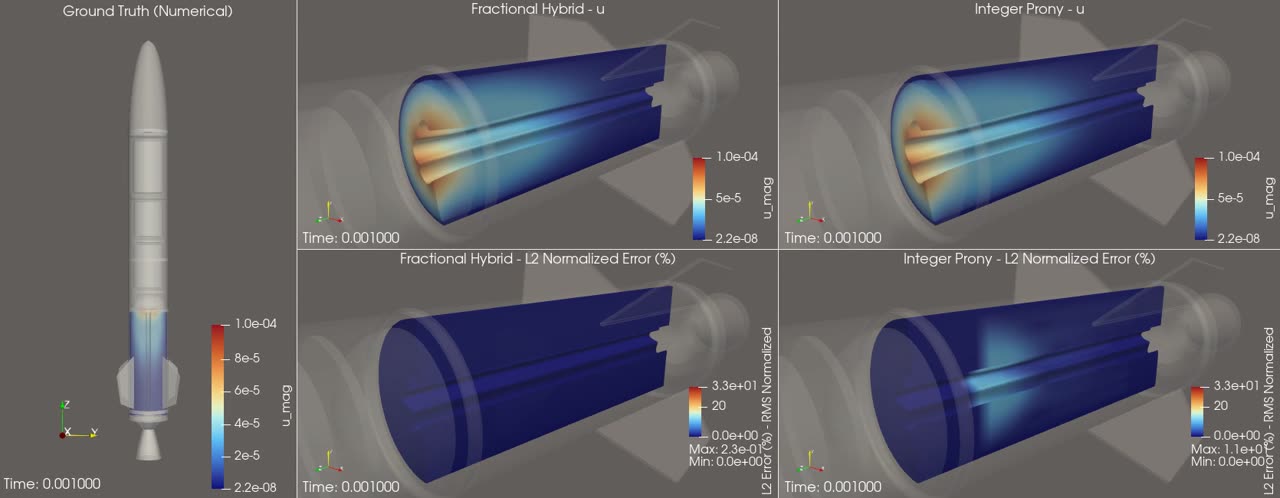
Phractals provides a path to encode material memory directly in a finite-element formulation, supporting experimentally grounded studies of damping, dispersive propagation, and transient deformation. It also offers a new generation of hybrid (integer-fractional) models that are particularly accurate for biomaterials.

Simulation examples

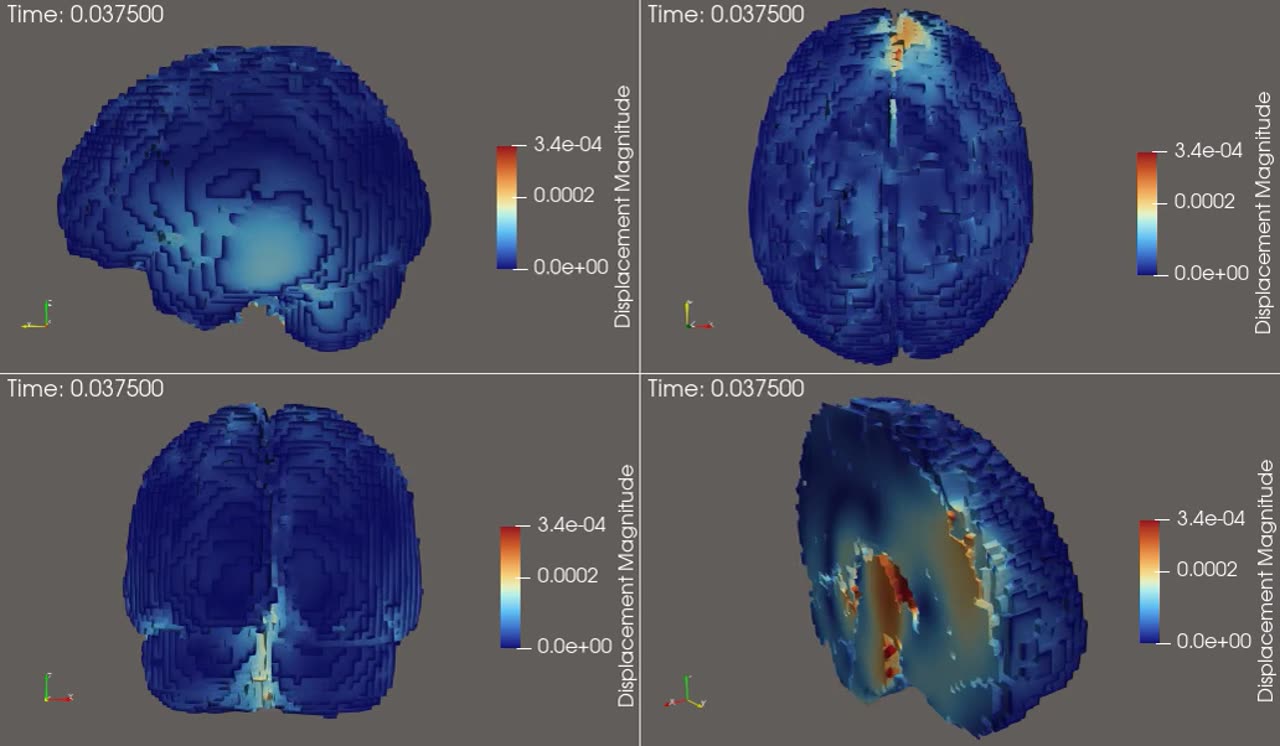
The showcased brain-impact simulation tracks displacement magnitude across multiple views and its decay over time.

Loading conditions for the brain-impact case

The time history and direction of the applied loading used to obtain the brain response shown above.

Transient brain-impact response

Two synchronized views show the displacement field propagating through the model. The time-history of the displacement at a prescribed point and the error plot are also provided.

Engineering value

Why this application matters.

Study how deformation propagates and attenuates through soft, heterogeneous media.

Connect measured time-dependent behavior to a compact simulation model.

Support biomedical research and material-design comparisons without overstating the demonstration.

Technical discussion or pilot evaluation

Bring us your data and modeling challenges.

We will identify whether this Phractals workflow fits your engineering decision.

Discuss a pilot